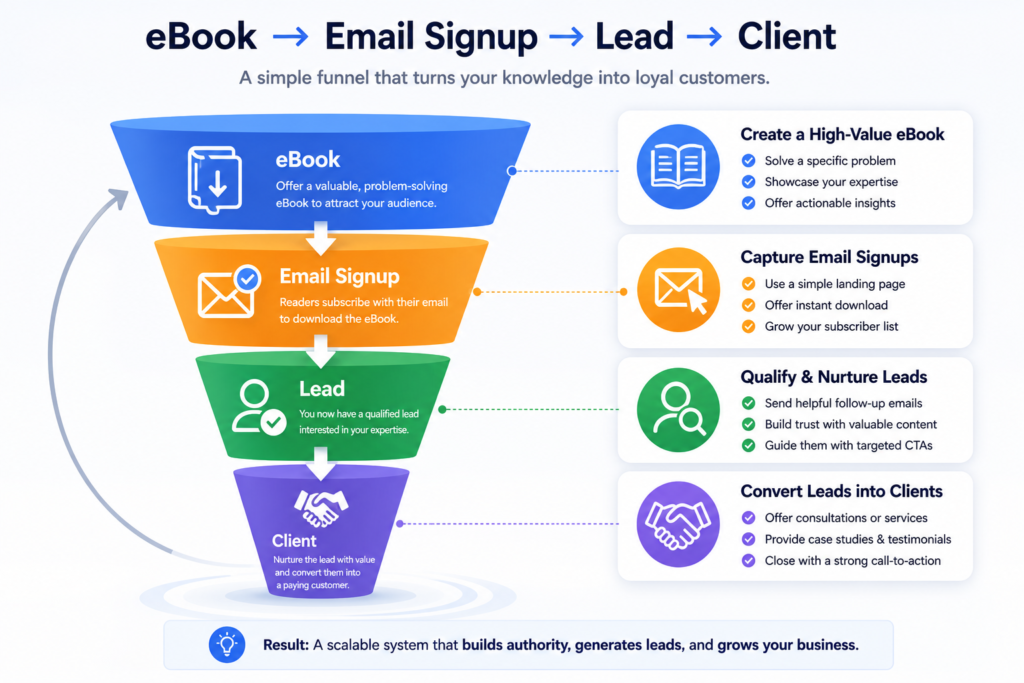
In today’s digital world, information is everywhere—but authority is rare. If you have valuable knowledge, experience, or insights, turning that into a well-crafted eBook can position you as a trusted expert in your field.
A high-impact eBook does more than share information. It builds credibility, attracts your ideal audience, and generates leads for your business. The key is knowing how to transform your ideas into structured, valuable content that people actually want to read.
This guide breaks down the process of creating an eBook that establishes authority and drives results.
1. Start with a Clear Purpose
Every successful eBook begins with a clear goal. Without direction, your content will feel scattered and ineffective.
Ask yourself:
- Who is this eBook for?
- What problem am I solving?
- What action do I want readers to take?
Your purpose could be to:
- Generate leads
- Educate your audience
- Build brand authority
- Support your services
Key Insight:
A focused eBook is more valuable than a broad one. Clarity leads to impact.
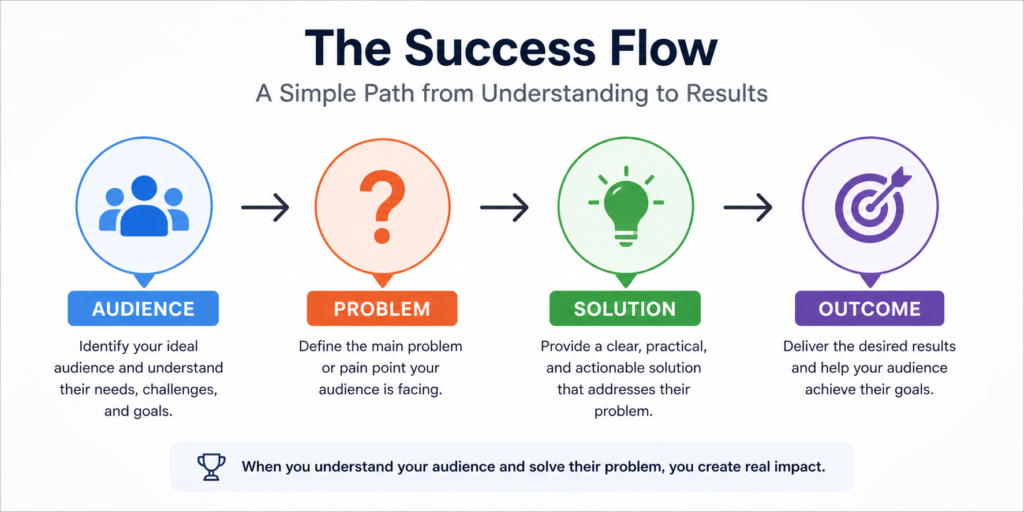
2. Choose a Topic That Solves a Real Problem
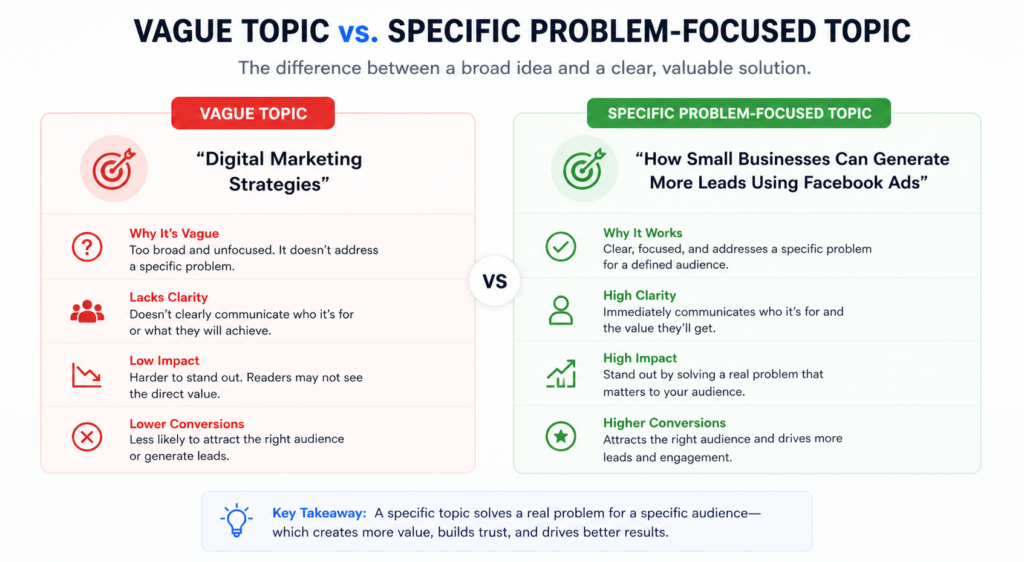
People don’t download eBooks for entertainment—they download them for solutions.
Your topic should:
- Address a specific pain point
- Offer practical value
- Align with your expertise
- Relate to your services
Examples:
- “How to Build a High-Converting Website”
- “A Beginner’s Guide to Brand Strategy”
- “Content Marketing That Actually Works”
Pro Tip:
The more specific your topic, the more relevant and useful your eBook will be.
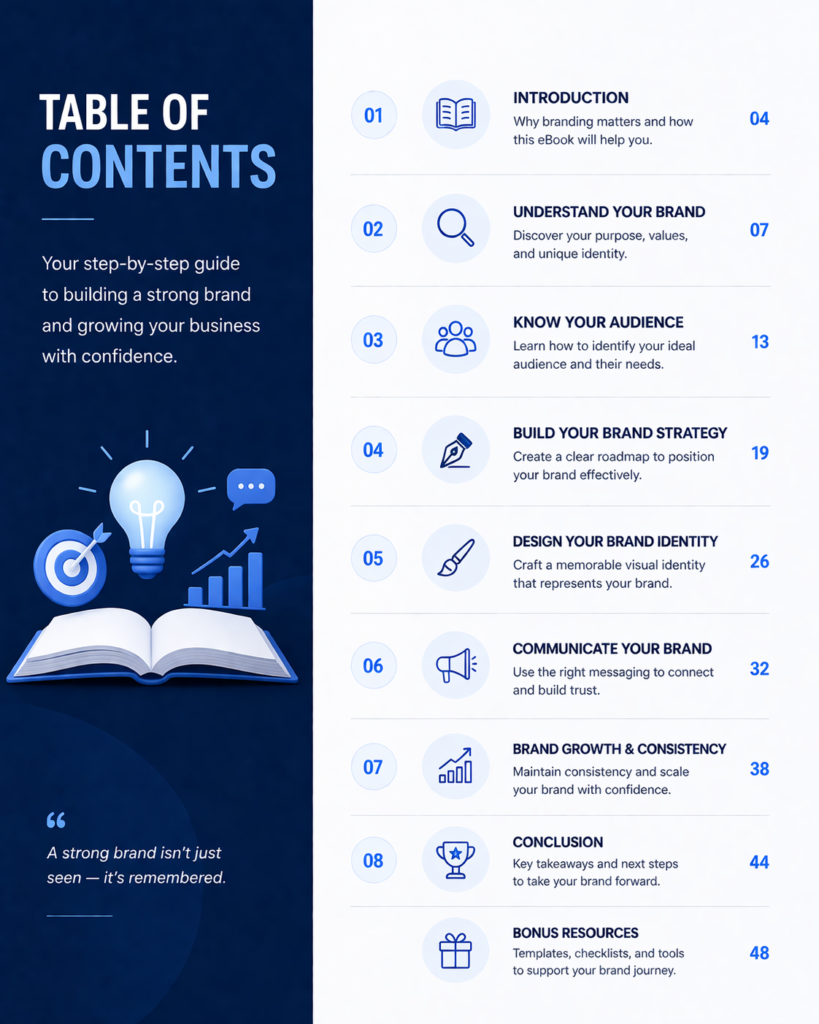
3. Structure Your eBook for Clarity
A well-structured eBook keeps readers engaged and makes your message easier to understand.
Use a simple framework:
- Introduction (set the context)
- Problem (highlight the challenge)
- Solution (provide actionable insights)
- Implementation (step-by-step guidance)
- Conclusion (summarize and guide next steps)
Break your content into:
- Short sections
- Clear subheadings
- Bullet points where necessary
Key Insight:
Good structure improves readability and keeps readers moving forward.
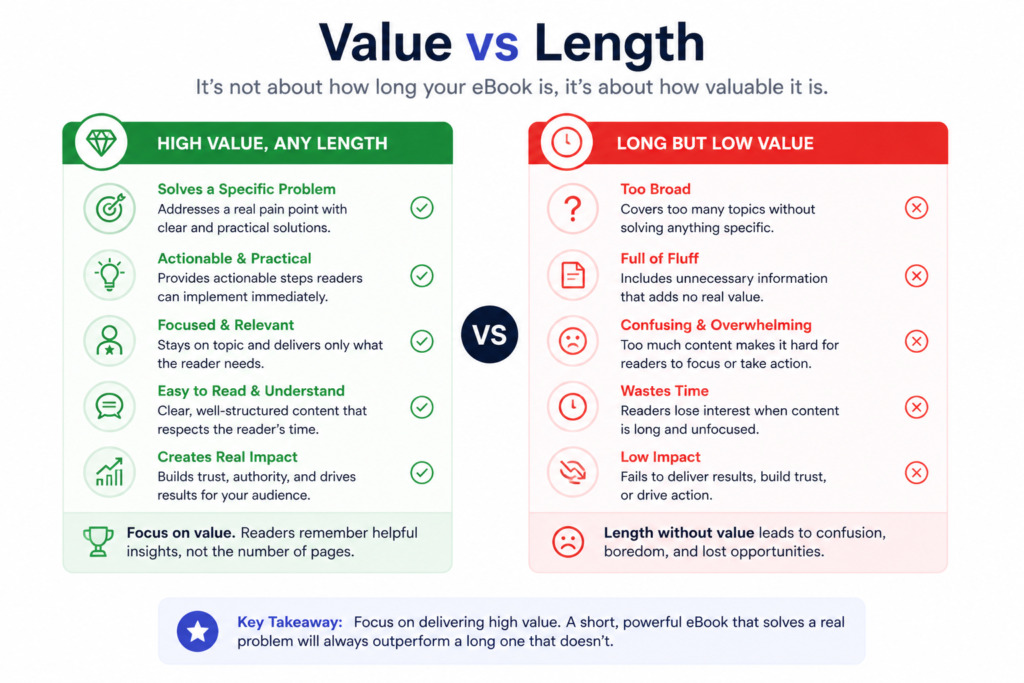
4. Focus on Value, Not Length
Many people think a longer eBook is better. It’s not.
What matters is:
- Clarity
- Relevance
- Practical insights
Your goal is to:
- Solve a problem quickly
- Provide actionable steps
- Deliver real value
Avoid:
- Fluff or unnecessary explanations
- Overly complex language
- Repetition
Key Insight:
A concise, high-value eBook builds more authority than a long, unfocused one.
5. Write in a Clear and Engaging Tone
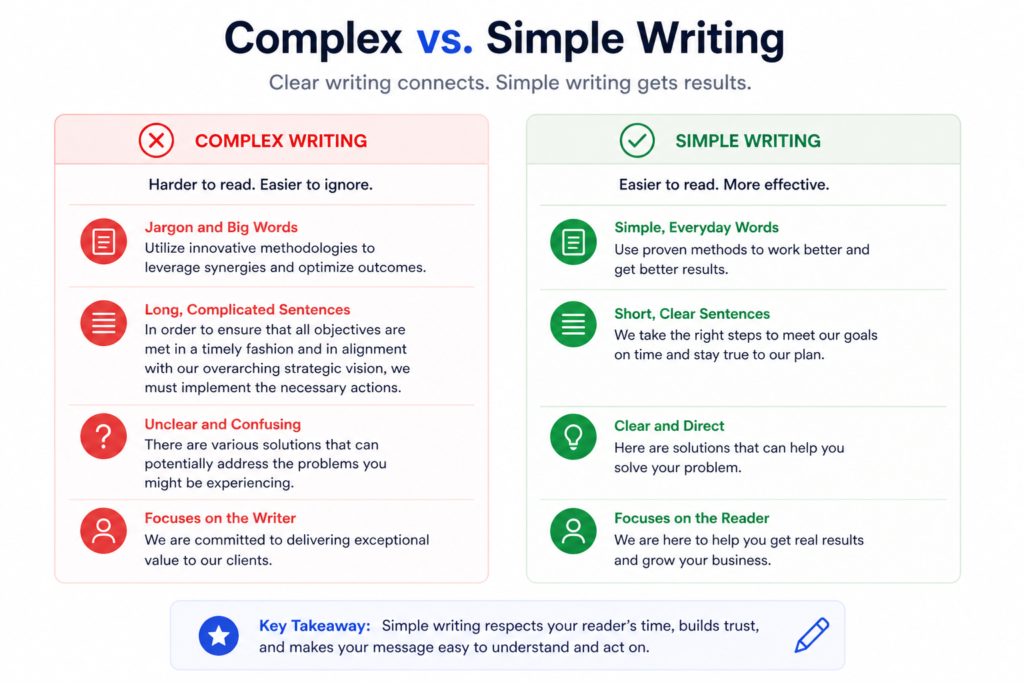
Your eBook should feel like a conversation, not a lecture.
To improve readability:
- Use simple language
- Keep sentences short
- Write in an active voice
- Speak directly to the reader
Instead of:
“Businesses often struggle with…”
Say:
“You may be struggling with…”
Why it works:
A direct, human tone keeps readers engaged and builds connection.
6. Design Matters More Than You Think
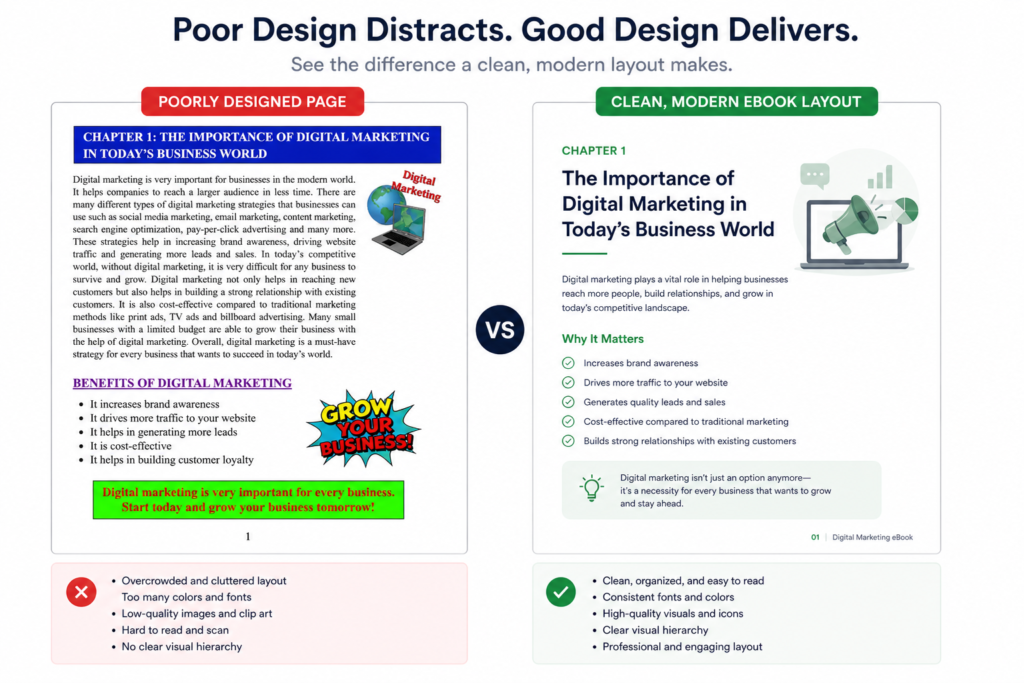
Even the best content can fail if the design is poor.
A professional eBook design should include:
- Clean layout and spacing
- Consistent fonts and colors
- Visual elements (icons, charts, images)
- Easy-to-read formatting
Design helps:
- Improve readability
- Keep readers engaged
- Reinforce your brand identity
Key Insight:
People judge quality by appearance. Good design builds trust instantly.
7. Include Strategic Calls-to-Action (CTAs)
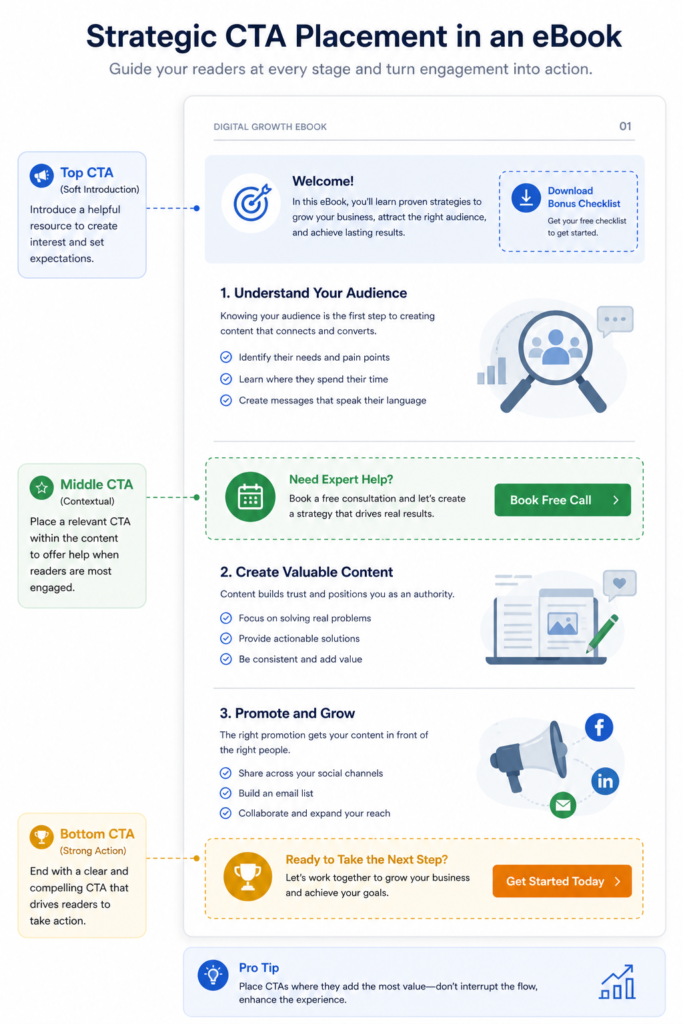
Your eBook should guide readers toward the next step.
Effective CTAs include:
- “Book a Free Consultation”
- “Visit Our Website”
- “Download More Resources”
- “Contact Us for Services”
Place CTAs:
- At the beginning (soft introduction)
- In the middle (contextual)
- At the end (strong action)
Key Insight:
Without a CTA, your eBook informs—but doesn’t convert.
8. Optimize Your eBook for Lead Generation
A high-impact eBook is also a powerful lead generation tool.
To maximize results:
- Offer it as a free download
- Use a landing page
- Require an email signup
- Promote it through your website and social media
You can also:
- Repurpose sections into blog posts
- Share insights on social platforms
- Use it in email marketing campaigns
Why it works:
An eBook positions you as an expert while building your audience.